
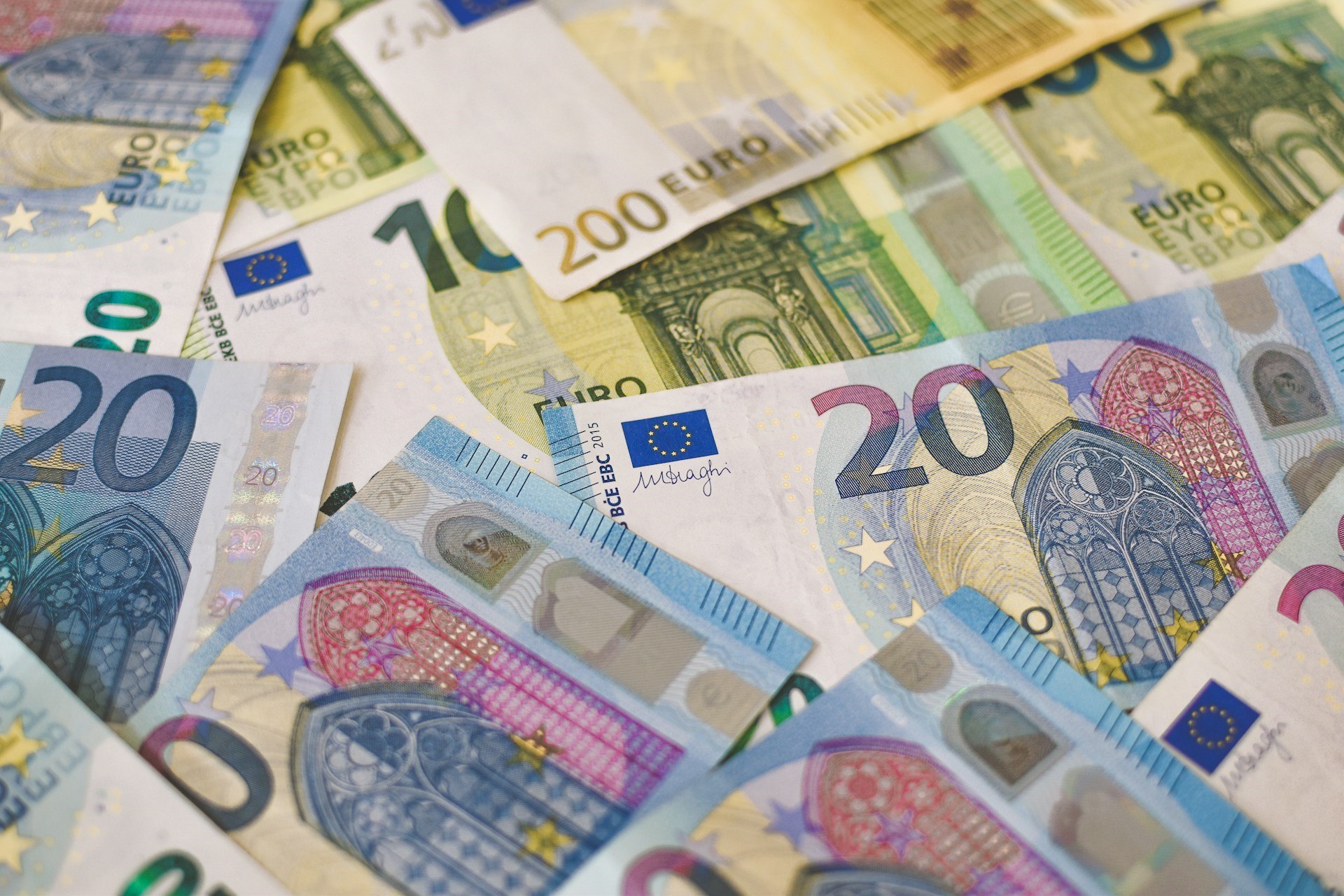
The euro is the second-most-used reserve currency globally and the official currency of 20 countries that make up the eurozone, a market that brings together more than 340 million consumers. For companies operating in this economic area or maintaining business relationships with European partners, making and receiving payments in euros is not just a matter of geographical convenience, but a financial decision that can reduce operational costs, simplify treasury management, and mitigate exchange rate risks. Below, we analyze the main advantages of centralizing corporate payments in euros.
Financial stability and predictability
The euro has demonstrated a stable track record since its introduction into financial markets, as it is backed by a solid central bank and a monetary policy aimed at preserving its purchasing power. This stability provides companies with a framework of predictability for planning their medium- and long-term cash flows, without the uncertainty introduced by highly volatile currencies or by sudden inflationary shocks.
When operating in euros, companies that make recurring payments to suppliers or collaborators in the eurozone do not have to constantly recalculate budgets due to exchange rate fluctuations. A mass payment platform that operates natively with this currency can automate periodic disbursements with the certainty that transferred amounts will retain their real value, facilitating financial planning and relationships with business partners.
Reduction of currency conversion costs
Every time a company converts one currency into another to make a cross-border payment, a cost is incurred that is not always visible at first glance: the spread between the market exchange rate and the exchange rate applied by the financial institution, plus the conversion service fees. These costs, which may seem minor in individual transactions, can accumulate significantly when the company handles a high volume of transactions.
By centralizing payments in euros, organizations avoid unnecessary currency conversions, resulting in direct savings and greater transparency into the costs of each transaction. Likewise, a B2B payment provider that offers processing in euros without hidden exchange rates allows companies to optimize their profit margins and allocate those resources to higher value-added activities.
Access to a wide and unified market
The eurozone constitutes one of the largest economic blocs on the planet, with a harmonized regulatory framework and an integrated payment infrastructure that allows capital to move between member countries with the same ease as a domestic market. For any company with international expansion aspirations, operating in euros means accessing this market without the barriers imposed by multi-currency transactions.
On the other hand, using the euro as a billing and payment currency simplifies negotiations with clients and suppliers who already operate in it. This monetary integration accelerates business cycles and strengthens relationships with partners by offering clear, predictable contractual conditions from the first contact.
Integration with the SEPA system
The Single Euro Payments Area, known as SEPA, allows bank transfers in euros between participating countries with the same speed and cost as national transfers. This means that a company in any eurozone country can pay a supplier in another member state within a maximum of one business day, with fees comparable to those for a domestic operation.
For businesses that process mass payments, the SEPA infrastructure offers a significant operational advantage by standardizing file formats, reducing settlement times, and automating accounting reconciliation. Additionally, an API REST for global payments that integrates with SEPA schemes will further facilitate this process, connecting the company’s internal systems to the provider’s settlement layer without the need for manual or complex processes.
Simplified treasury management
Maintaining positions in multiple currencies adds a layer of complexity to treasury management. Many companies underestimate currency conversion until the volume of operations forces them to dedicate specific resources to exchange control, risk hedging, and foreign currency account reconciliation.
Operating with the euro as the main currency allows companies to simplify their treasury structure, especially by reducing the number of bank accounts and currencies they must manage. This simplification not only reduces administrative costs but also improves visibility into the organization’s true financial position, facilitating decision-making on investments, payments to suppliers, and dividend distribution.
Coverage against exchange rate risks
Any company that bills in one currency and pays in another is exposed to exchange rate risk, that is, the possibility that an adverse fluctuation in the exchange rate will erode its margins or unexpectedly increase the cost of its obligations. This exposure is especially relevant for businesses operating with tight margins or handling long-term contracts, where currency variations can completely alter projected profitability. By aligning the billing currency with the payment currency, companies eliminate this risk, creating a natural hedge that protects their finances without the need to contract complex financial instruments.
What do you think about this topic? Do you know other advantages of euro payments for companies?
If you are interested in our payments in euros for companies, you can contact us by visiting the following link.
Image by Ibrahim Boran via Unsplash.com under creative commons license.