
The Cardano network is a public Proof-of-Stake blockchain designed to be secure, scalable, and sustainable. Since 2017, the project has progressed through several phases, with academic specifications preceding each implementation and ongoing updates. This discipline drew criticism for its pace, but it also helped the network reach 2025 with an operational on-chain governance model and an active scalability roadmap. Below, we explore the Cardano network and its main features in detail.
Origin and network design
Input Output Global launched Cardano in 2015, a company founded by Charles Hoskinson, one of the co-founders of Ethereum. The mainnet went live in September 2017 and has since advanced through planned phases, Byron, Shelley, Goguen, Basho, and Voltaire, each targeting a distinct layer of the blockchain equation.
Its difference from other projects lies not only in its timeline, but in its methodology. Before incorporating major changes, the team publishes formal specifications, submits them to peer review in the academic community, and only then deploys them to production. This approach explains why Cardano took longer than other networks to enable smart contracts and why its codebase requires fewer emergency patches than competing platforms.
Proof-of-stake consensus with formal foundations
Cardano’s core engine is Ouroboros, a family of proof-of-stake protocols designed with formal security proofs. Unlike networks competing through computational power, block producers in Cardano are pseudo-randomly selected in proportion to the stake delegated to them by participants.
The version running on the mainnet is Ouroboros Praos, where block validation is organized into five-day epochs divided into one-second slots, and slot leaders are selected via verifiable random functions. This structure allows the network to operate without permanent coordination committees while maintaining security as long as the majority of the stake remains in trusted hands.
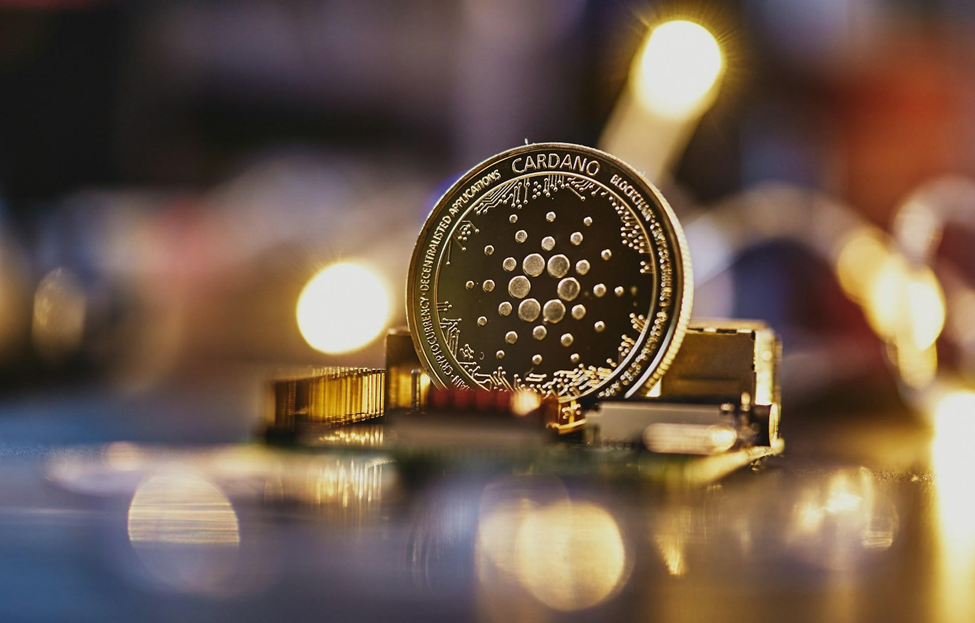
The eUTXO model and smart contracts
Cardano does not use Ethereum’s account-based model; instead, it adopts the Extended UTXO (eUTXO) model. Rather than mutable account balances per address, it represents value as unspent transaction outputs that are created and consumed discreetly, like cash bills. This extension adds three structural elements that let smart contracts execute without sacrificing the UTXO model’s determinism.
As a result, a transaction can be validated before submission with a high degree of certainty about its behavior—a capability that is particularly beneficial for conditional payments or scheduled settlements. Developers transitioning from account-based networks, such as Ethereum or ERC-20 environments, notice this structural difference when designing multi-party workflows.
Scalability from Hydra to Leios
The most frequent critique of Cardano has revolved around layer-1 throughput. The ecosystem addressed this with two concurrent strategies: Hydra operates as a layer-2 state-channel solution, reached version 1.0 in October 2025, and enables sub-second transaction confirmations within closed participant pools at near-zero fees.
Leios extends consensus by introducing endorser blocks to accelerate and scale the network alongside the Praos chain, increasing layer-1 processing capacity and running on the public testnet since June 2026. Together, these paths—scaling horizontally with Hydra and vertically with Leios—form the ecosystem’s mid-term performance roadmap.
Decentralization and governance in the Voltaire era
Cardano distributes block production across thousands of independently operated stake pools. Community metrics show more than 2,700 active stake pools, with over 3,200 having produced blocks, reducing reliance on a limited validator set.
The Voltaire phase introduced an on-chain governance system in which ADA holders, delegated representatives, the constitutional committee, and stake pool operators propose and approve network changes. The Plomin hard fork, executed on January 29, 2025, finalized this model’s initial capabilities and guided the network toward fully on-chain governance.
Cardano for corporate payments
The Cardano network supports several native stablecoins (USDCx, USDM, USDA, DJED, and iUSD). In 2026, the Cardano Foundation joined Mastercard’s crypto partner program to explore stablecoin settlements, merchant payments, and conversions between digital assets and fiat currencies. While this step does not make Cardano the dominant network for stablecoin payments, it indicates that its infrastructure is being evaluated by traditional financial institutions.
For businesses tracking the blockchain ecosystem, the key takeaway is an alternative architecture with a deterministic accounting model and a governance approach that prioritizes predictability. Consequently, those operating with Tether (USDT) on other chains will find a different structural logic in Cardano—closer to Bitcoin’s value model, yet capable of executing complex conditional logic.
What are your thoughts on this topic? Do you know of any other Cardano features we haven’t mentioned?
If you are interested in implementing stablecoin payments for businesses using institutional-grade infrastructure, you can contact us by visiting the following link.