
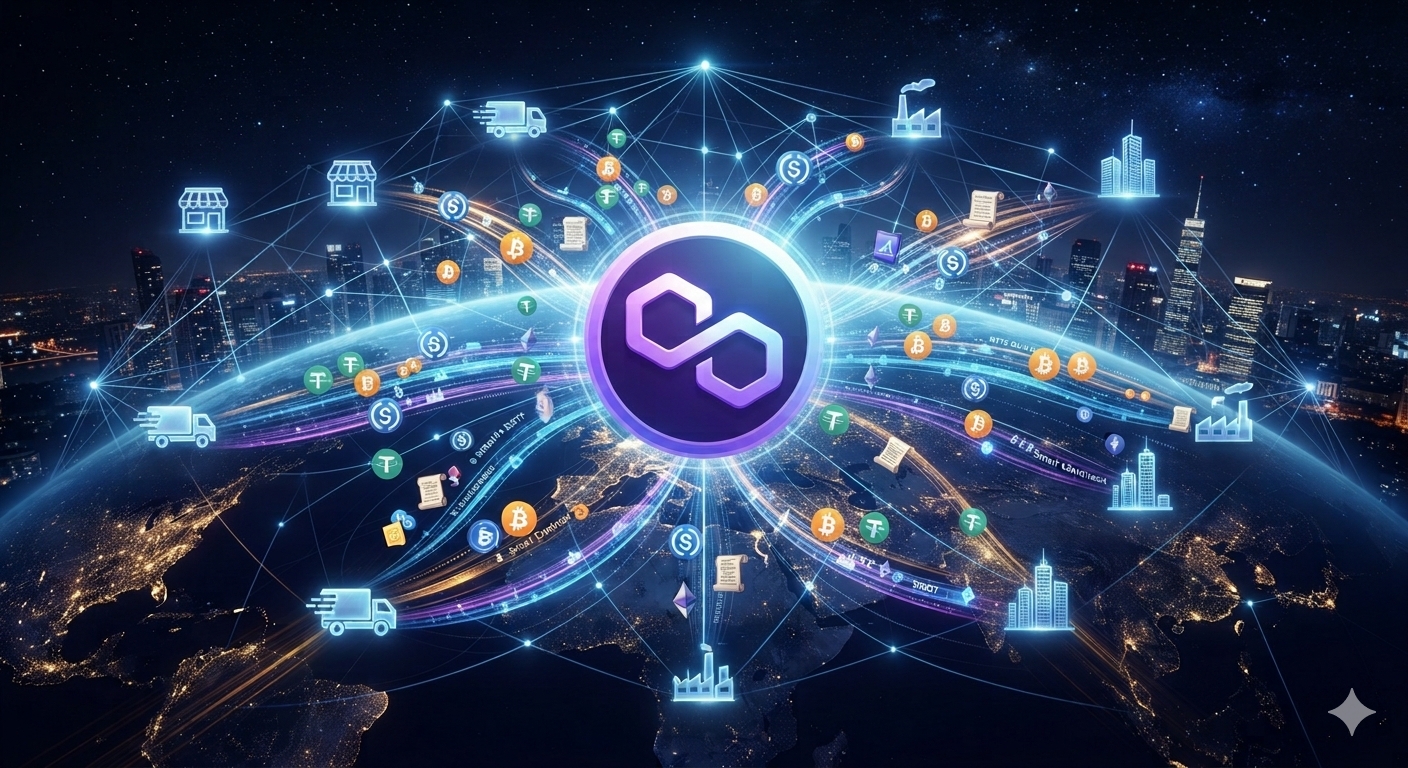
Polygon is one of the most widely used blockchain networks globally, featuring a parallel network infrastructure on Ethereum that acts as a “fast lane” to process digital transactions with lower costs and shorter wait times. Its primary purpose is to de-congest traffic on the base network by processing data “off” the main chain and subsequently recording the results securely. This technical evolution, powered by its new native token, POL, is a strategic tool for companies managing mass cryptocurrency payouts, reducing operational costs while maintaining strict control over international treasury flows. Below, we explore the main features of the Polygon network and its impact on the global business environment.
Origin and evolution of Polygon
The project originally launched as Matic Network, created as a direct response to the speed limitations and high transaction fees affecting Ethereum users. Over time, the platform expanded its scope and adopted the identity of Polygon, becoming a multi-chain environment that connects different solutions under a unified technical architecture.
One of the network’s most significant milestones was the transition of its native token from MATIC to POL. This upgrade to the economic core expanded validation functions within the ecosystem and strengthened the network to meet enterprise-level demands. For companies seeking stability, Polygon’s ongoing development offers a predictable operational foundation for scheduling large-scale fund transfers and executing mass payouts.
EVM compatibility
Polygon’s primary operational advantage is its full alignment with the Ethereum Virtual Machine (EVM). In practice, any automated program or smart contract designed for Ethereum can be deployed directly to Polygon without complex code rewrites. This significantly reduces integration risks and development timelines for companies migrating financial workflows to the blockchain.
This technical compatibility lets operational infrastructures and enterprise payment platforms like Smart Bulk Payments integrate the network seamlessly into their settlement tools. By following Ethereum’s global technical standards (ERC-20), companies can unify institutional fund management, ensuring asset transfers to virtual wallets or corporate gateways occur without compatibility issues.
High-volume processing capacity
The Polygon network stands out for its ability to validate thousands of operations per second, overcoming the physical limitations of traditional infrastructures. This speed is crucial in sectors with constant operational demand spikes, such as payment systems for delivery apps managing large driver networks that require daily payouts. The network’s technical throughput enables processing global batch payrolls in just a few minutes, benefiting overall business operations.
Low network fees
While operating on Layer 1 networks can drive high per-transaction costs, Polygon network fees are generally reduced to fractions of a cent. For example, in service marketplace models—where content creators and freelancers frequently withdraw small commissions—low network costs protect corporate profit margins and improve user and partner satisfaction.
Fast payment confirmation
Agile block confirmation directly enhances liquidity for corporate finance departments. Polygon confirms transactions within seconds, eliminating traditional bank transfer delays. This speed is essential for business models with continuous cash flows, such as online casinos, where players expect instant withdrawals and operators need uninterrupted business liquidity.
Cross-chain connectivity with AgLayer
By incorporating its aggregation layer (AgLayer), Polygon enables cross-chain transfers of funds and digital assets without relying on external bridges prone to technical failures. Online gaming payment systems benefit directly from this feature, distributing virtual assets or rewards across multiple gaming platforms while maintaining a unified, responsive ecosystem for users.
Directly inherited security
Although transactions are processed on a secondary path, final settlement relies on the economic and cryptographic security of the Ethereum mainnet. This hybrid architecture offers a robust layer of protection for adult entertainment payment systems handling significant capital volumes discreetly, instilling technical confidence against potential cyber or financial risks.
Economic innovation with the POL token
The POL token serves as the network’s operational fuel, covering gas fees and incentivizing validator nodes. Its flexible design supports multiple chains long term, giving financial teams the predictability needed to estimate operational budgets without sudden price fluctuations or surprises.
Massive stablecoin liquidity
Polygon hosts a vast array of digital assets pegged to the US Dollar, such as USD Coin (USDC) and Tether (USDT). Operational infrastructures and payment systems like Smart Bulk Payments leverage this ecosystem to help companies minimize foreign exchange volatility. In cross-border trade, settling via stablecoins ensures funds retain their real value from start to finish.
What are your thoughts on this topic? Do you know of other key features of the Polygon network?
If you are interested in mass stablecoin payout services for enterprises, you can contact us by visiting the following link.
Image by Vitaly Gariev via Unsplash.com under Creative Commons license.